ENTERTAINMENT

BLACKLIVES, COMMUNITY, ECONOMICS, ENTERTAINMENT, FINANCE, HEALTH, JUSTICE, NEWS, POLITICS, RACE, SPORTS

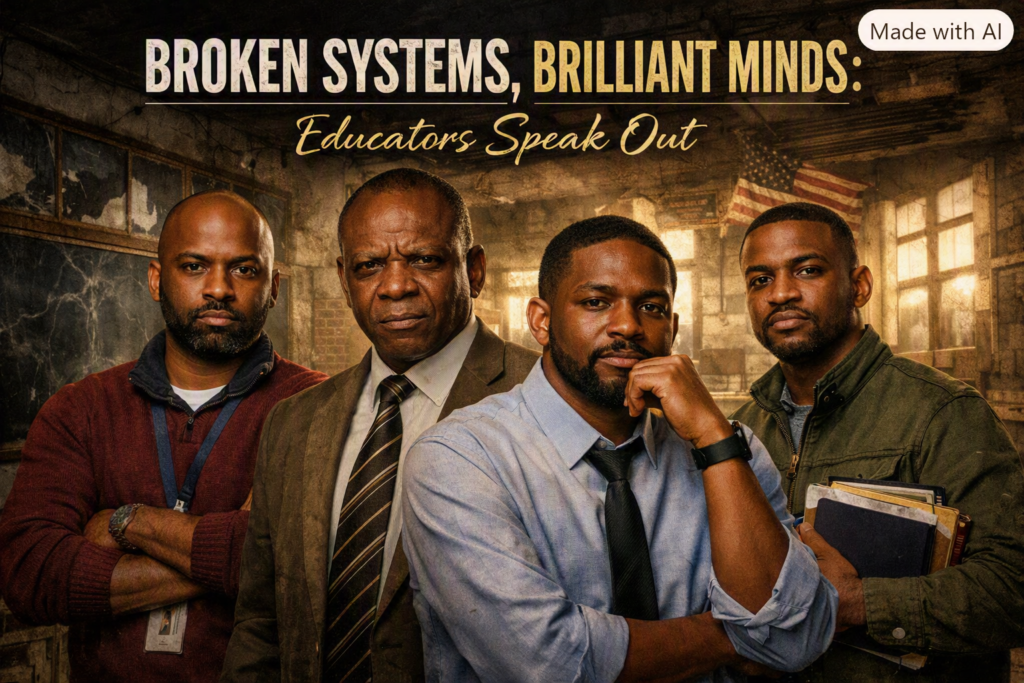
Broken Systems, Brilliant Minds: Why America’s Educators Are Speaking Out

Published by America in Black and White (AMIBW) | Host: Charles Zackary King | August 31st Special Edition A Nation’s Children Are Waiting for Adults to Tell the Truth Right now, in schools across this country, a child is sitting in a classroom that does not see them. Not truly. The textbooks do not reflect their history. The standardized tests do not account for the gaps the system itself created. The teachers, through no entirely personal fault, do not always know how to reach them. And the administrators who could change the culture at scale are, too often, a demographic mirror of a past that was never meant to include that child in the first place. This is the state of American public education for Black, brown, immigrant, and low-income students. It is not a tragedy to be lamented in passing. It is a crisis to be named, confronted, and dismantled with precision and that is exactly what four extraordinary educators are prepared to do on August 31st, when America in Black and White airs its most urgent special edition yet: Broken Systems, Brilliant Minds: Educators Speak Out. These are not commentators. These are not policy theorists writing from the comfort of a think tank. These are people who have walked into the building, sat with the data, built the programs, written the books, and stood in the rooms where the decisions get made, sometimes as the only Black face at the table. What they have to say is not comfortable. It is necessary. The Moment That Matters Most: Sixth Grade and the Dropout Clock Dr. Jonathan A. Brown has spent his career in the middle, literally. As principal of Longfellow Middle School in the Mount Vernon City School District in New York, and as the author of a landmark doctoral dissertation that examined twenty-one sixth-grade schools across Westchester County, Dr. Brown has done something the broader education reform conversation rarely does: he has looked squarely at the grade-level moment where everything begins to turn. His research, conducted at St. John Fisher College, identified sixth grade as what he calls the “keystone grade”, the absolute center of a student’s public school journey, the grade where college readiness indicators first become visible, and where the risk of eventual dropout can be tracked with statistical clarity. This is not a metaphor. It is a finding rooted in descriptive statistics, correlation matrices, and regression analysis across more than two dozen schools. What Dr. Brown discovered is that the way a school organizes its curriculum, instruction, and assessment in sixth grade, what he terms the CIA cluster, has a statistically significant impact on student achievement. The systems we design for eleven-year-olds are not preparatory. They are, in many ways, determinative. And far too many schools are still guessing. When we talk about the achievement gap, we are almost always talking about it too late. Dr. Brown forces us to look earlier, act faster, and build schools that understand the particular developmental urgency of young adolescents between ten and fourteen years old. If that window closes without the right intervention, the clock does not reset. When 94% of Students Fail, the Problem Is Not the Students Dr. Shaquille Spearman does not allow us the comfort of ambiguity. His doctoral research at Liberty University examined one specific school, Jacksonville Lighthouse Charter School – College Prep Academy in Jacksonville, Arkansas and one specific problem: why, in 2022, 137 out of 146 students in grades 7 through 10 failed to meet the math readiness benchmark on the ACT Aspire. That is approximately ninety-four percent. Nearly every child. Failing a benchmark that will follow them for the rest of their academic lives. Dr. Spearman’s research revealed that the failure was not the students’. It was the system’s. Teachers were not provided with detailed reporting categories. Professional Learning Communities “PLCs”, were new and underdeveloped, leaving educators without the collaborative infrastructure to respond to data. Students were arriving in math classrooms underprepared for the literacy-driven demands of standardized questions. Administrators were rated at 1.7 out of 5 in their use of data mining. These are not anecdotes. These are measurements and they demand a systems-level response, not another round of blaming children who were never given a fair chance. Dr. Spearman’s framework, drawing on Feuerstein’s Structural Cognitive Modifiability, Bloom’s Taxonomy, and metacognitive strategy, insists that students are capable of far more than their test scores suggest, provided that teachers are trained to reach them and systems are designed to support that reach. The crisis at Jacksonville Lighthouse is not an outlier. It is a window into what is happening, quietly, in charter schools and public schools nationwide. Someone has to say it. Dr. Spearman did. Literacy Is Not a Metric — It Is a Matter of Survival In Oshkosh, Wisconsin, Dr. Samuel Coleman is building something that the education system rarely builds on purpose: a community literacy infrastructure that is explicitly designed for the students the system has historically ignored. As Assistant Superintendent of Instruction for the Oshkosh Area School District and Co-Founder of READ MORE Oshkosh, Dr. Coleman has spent his career at the intersection of literacy, leadership, and liberation, three words that are not coincidental. Dr. Coleman, who holds a Ph.D. and M.S. from the University of Wisconsin-Madison, an M.Ed. from LSU-Shreveport, an M.S. in School Counseling from Concordia University, and is currently completing an Ed.M. at Harvard University, speaks with the authority of someone who has been both the student underestimated by a system and the administrator working to change it from within. His READ MORE Oshkosh initiative was built specifically for Black, immigrant, and refugee students, communities for whom literacy has always been more than an academic exercise. It has been a means of claiming personhood, access, and power in a society that has used illiteracy as a tool of control. “Representation matters,” he has said. “And not just for Black students, but all students need to see diversity represented in the materials that they read,

BLACK PEOPLE, BLACKLIVES, COMMUNITY, ECONOMICS, ENTERTAINMENT, FINANCE, HEALTH, JUSTICE, JUSTICE SYSTEM, MUSIC, NEWS, POLITICS, RACE, SPORTS

Before the Rainbow Flags: What We Don’t Know About LGBTQ+ History

Let me ask you something. If I said “Stonewall,” what would you picture? If you’re like most Americans, you probably picture a bar. Maybe a crowd. Maybe a pride flag. You might know it happened in 1969 in New York City. You might know it was a turning point for LGBTQ+ rights. But here’s what most people don’t know and what we’re getting into on the new Changing Trends and Times LGBTQ+ America series launching August 29th. So let’s start with a few things that might genuinely surprise you. 1. The people who started the Stonewall rebellion were Black and brown trans women. The dominant image of the Stonewall uprising, if there even is a dominant image, tends to be white. But the people who were most visibly fighting back on the night of June 28, 1969, were trans women and gender-nonconforming people of color. Marsha P. Johnson, a Black trans woman from Elizabeth, New Jersey, is one of the most important figures of that night. She arrived in New York City with $15 and became one of the architects of the modern LGBTQ+ rights movement. You probably weren’t taught that in school. Neither was I. 2. The federal government actively fired people for being gay — for decades. Most people know about McCarthy and the Red Scare. Fewer people know about the Lavender Scare, the parallel campaign in the 1950s that purged thousands of gay and lesbian Americans from federal jobs. The logic? That being gay made you a “security risk.” This wasn’t fringe policy. It was official U.S. government doctrine. 3. Bayard Rustin organized the March on Washington — and was erased for being gay. Bayard Rustin was one of the most gifted organizers in American civil rights history. He planned the logistics of the 1963 March on Washington, one of the defining moments of the twentieth century. And then he was quietly pushed out of the spotlight because civil rights leadership feared that his identity as a gay Black man would be used against the movement. His contribution was real. His erasure was deliberate. 4. The AIDS crisis killed over 700,000 Americans — and the President didn’t speak publicly about it for years. The first AIDS cases were reported in 1981. President Reagan didn’t say the word publicly until 1987. More than 20,000 Americans had already died. The community had to build its own systems of care, hospices, support networks, mutual aid, because the government decided those dying weren’t worth a public response. 5. The legal victories of the 2010s are not permanently protected. Marriage equality. Workplace protections. These feel settled to a lot of people. They are not. Supreme Court justices have explicitly called for reconsidering those rulings. More than 500 anti-LGBTQ+ bills have been introduced across state legislatures since 2020. The fight is not over. It moved, it didn’t end. This is exactly why we’re launching Changing Trends an Times LGBTQ+ America on AMIBW Media. Because you can’t protect what you don’t know. You can’t honor what you’ve been taught to forget. And you can’t build a future without being honest about the past. Episode 1: The Historical Arc drops Saturday, August 29, 2026 at 2:00 PM EST. Watch it. Share it. Bring someone with you. Now, we want to hear from you: What piece of LGBTQ+ history surprised you most? What were you never taught? Tell us in the comments below. Please click the play button in the middle of the box Saturday, August 29, 2026 at 2pm EST:

BLACK PEOPLE, BLACKLIVES, COMMUNITY, ECONOMICS, ENTERTAINMENT, FINANCE, HEALTH, JUSTICE, NEWS, POLITICS, RACE, SPORTS

They’re Not Just Building Businesses —They’re Building Brotherhood

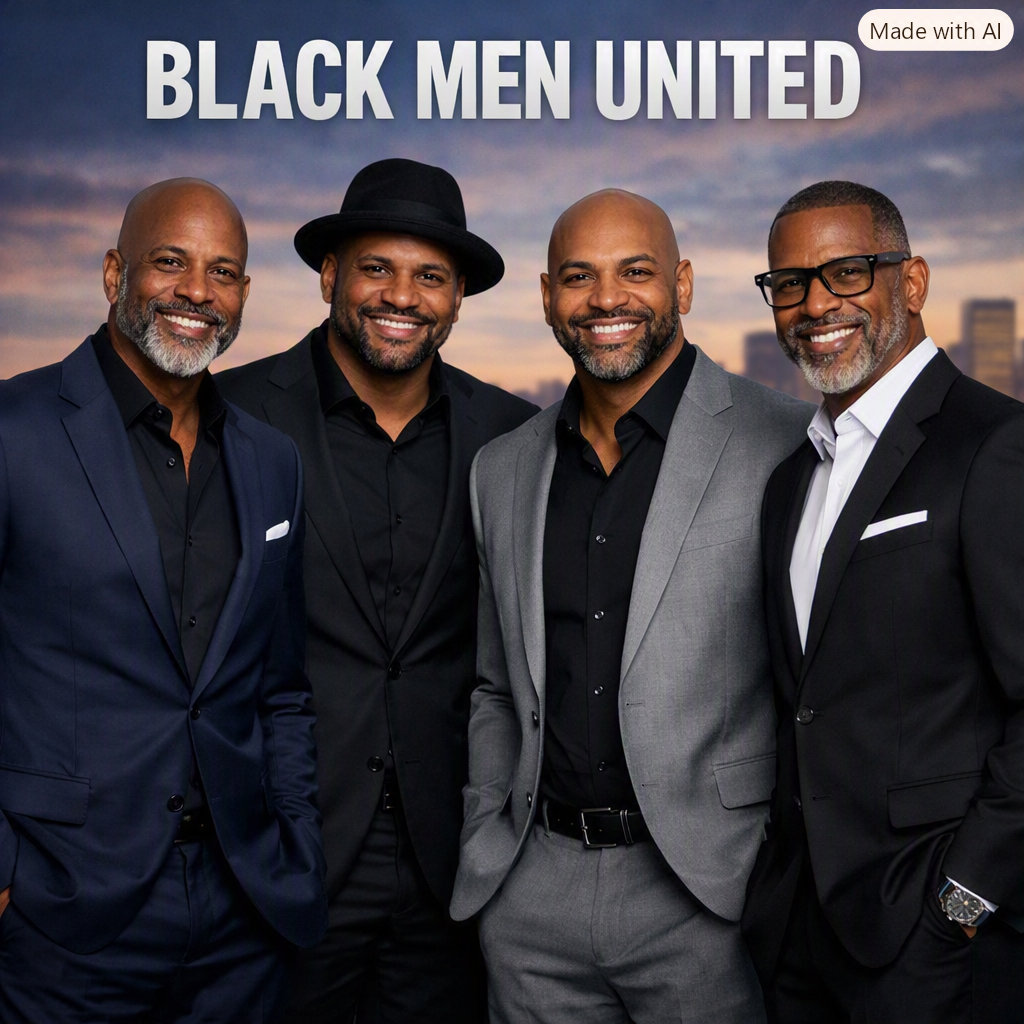
Four Black Entrepreneurs You Need to Know Before They Take Over the Room By Charles Zackary King | America in Black and White | Season 4, Episode 135 WEDNESDAY, AUGUST 26, 2026   Left to right — Evan Campbell, Wendell Holton, Leonard King, and Frederick Anthony “Tony” Magby. Together, they are “Black Men United.” THE HOOK There is a lie that has been told so many times, in so many rooms, by so many mouths, that it has almost calcified into truth: that Black men don’t support each other. That they compete instead of collaborate. That the scarcity mindset runs so deep that there is no room at the table for a brother pulling up a chair. It is a lie and tonight, on a single episode of America in Black and White, four men are going to blow it apart, chapter by chapter, story by story, dollar by dollar. When four Black entrepreneurs sit at the same table, something shifts in the atmosphere. Not because of the industries they represent, though those are remarkable. Not because of the credentials they carry, though those are earned. But because of what it means when men who could be running in isolation choose instead to run together. They choose to be honest about the road. They choose to name the obstacles, share the blueprints, and refuse to let the next generation figure it out alone. That is what Black Men United looks like in practice. Not a slogan. An action. America in Black and White, the podcast and digital media platform hosted by Charles Zackary King, has never shied away from the conversations that matter most, the ones about legacy, community, economic power, and what it truly costs to build something from the ground up in this country. And on Wednesday, August 26, 2026, at 6:00 PM EST, Season 4, Episode 135 brings together four builders whose stories will make you rethink everything you thought you knew about what Black entrepreneurship looks like today. Tonight’s table is not just carrying resumés. It is carrying decades of sacrifice, quiet mornings before the rest of the world woke up, decisions made in the dark before the outcome was visible. It is carrying strategies you can use, wisdom you have been waiting for, and a spirit that this culture desperately needs right now. Pull up. This one is for all of us. WHY THIS EPISODE MATTERS For too long, the full complexity of Black men, as thinkers, as builders, as fathers, as mentors, as visionaries, as entrepreneurs, has been compressed into a single story. This episode refuses that compression. What you will witness in Season 4, Episode 135 is Black men in their full humanity: honest about their failures, clear-eyed about their missions, and deeply, deliberately committed to something larger than themselves. This is not a performance. This is a reckoning with what it means to build and to build well. The philosophical spine of this episode is rooted in a Desmond Tutu Black History Reflection and the Ubuntu principle, I am because we are. Ubuntu is not a sentiment. It is an architecture. It says that a person’s humanity is inextricably bound to the humanity of those around them. That no one rises alone. That the brother who succeeds strengthens the ground beneath every other brother still climbing. The themes that anchor this episode, Unity, Community Building, Brotherhood, Legacy, and Entrepreneurship, flow directly from that root. This is not just a podcast. It is a movement taking shape in real time, one honest conversation at a time. And at the center of that movement tonight are four men who have each built something worth talking about. Something worth studying. Something worth protecting. Allow us to introduce them properly, because they deserve more than a bio. They deserve a story. MEET THE MEN AT THE TABLE Evan Campbell-E&V Auto Evan Campbell, Founder of E&V Auto Before Evan Campbell ever picked up a wrench, he watched his mother hold a world together with quiet, unbreakable hands. She did not speak in grand declarations. She demonstrated. She showed up. And in that showing up, she handed her son something no classroom could give him: the understanding that resilience is not a feeling, it is a practice. It is the discipline of choosing, every single day, to keep going even when the outcome is uncertain. Evan carried that lesson into every garage, every engine, every negotiation. It became the foundation of everything he would build. But Evan was also a student of history and history radicalized his ambition. He found Malcolm X not as a distant figure but as a living instruction: know yourself, own your space, refuse to build someone else’s empire at the expense of your own. He found Alonzo Herndon, Atlanta’s first Black millionaire, who walked out of enslavement with eleven dollars and proceeded to build an insurance empire that served an entire people. Herndon did not wait for permission. He did not wait for favorable conditions. He identified a need in his community and became the answer. Evan saw that blueprint and recognized it immediately, because he had already started drawing his own version of it. The automotive industry, Evan understood early, is not merely a trade. It is territory. And Black men needed to own it. E&V Auto is not just a business, it is a declaration of economic sovereignty built through skilled craftsmanship and the refusal to let technical excellence remain someone else’s domain. When you hand a wrench to a man who understands what ownership means, you are not watching someone fix a car. You are watching someone write his own future, one honest repair at a time. Evan’s belief is simple and profound: the tools you master are the tools that free you. In a country that has historically tried to control the economic mobility of Black men by limiting their access to skilled trades, mastery becomes more than competence, it becomes resistance. Evan Campbell is building a legacy

BLACK PEOPLE, BLACKLIVES, COMMUNITY, ECONOMICS, ENTERTAINMENT, FINANCE, HEALTH, JUSTICE, NEWS, POLITICS, RACE, SPORTS

The Conversation That Changed the Room

HEADLINE: He Saw the Gap. He Built the Bridge. What Dr. Ferris W. Corbett Taught Me About Public Health, Legacy, and the Power of Showing Up for Your Community By Charles Zackary King | Host, America in Black and White There are interviews that go well. There are interviews that go really well. And then there are the ones, the rare ones, where the guest walks in and something in the air shifts. Something becomes more honest, more alive, more true. My conversation with Dr. Ferris W. Corbett on Episode 119 of America in Black and White was the third kind. Before the first question was even answered, I knew: this was going to be one of those conversations that people return to. Dr. Corbett is the Founder and Executive Director of HE Cares Training & Education Center LLC, a community-based organization dedicated to healthcare workforce development, health education, and professional empowerment in underserved communities. But to describe him only in those organizational terms would be to miss the point entirely. Dr. Corbett is not just building a training center. He is building a future. He is building a generation. And he is doing it with the kind of deliberate, love-fueled intentionality that you simply cannot manufacture. Lesson 1: The Gap You Cannot Unsee Is Your Assignment One of the most striking things Dr. Corbett said in our conversation was about the moment he decided to found HE Cares. He did not describe it as a strategic pivot or a market opportunity. He described it as a reckoning, the moment when he could no longer look at the healthcare education gap in his community and pretend it was someone else’s problem. “When you see a need and you have the tools to meet it,” he told me, “your silence becomes a choice.” That landed hard. How many of us have seen a gap, felt the pull toward it, and talked ourselves out of filling it? Dr. Corbett did not talk himself out of it. He built something instead. Lesson 2: Representation in Healthcare Is Not a Soft Ideal — It Is a Clinical Necessity Dr. Corbett spoke with extraordinary clarity about the importance of Black representation in health education and healthcare delivery. Research has shown that patients of color are more likely to follow through on health recommendations, more likely to trust their providers, and more likely to seek preventive care when they are treated by someone who shares their cultural background. This is not a feel-good statistic. This is a life-or-death reality. HE Cares exists, in part, to create more of those culturally resonant encounters, by training Black and Brown community members to become the healthcare professionals their neighborhoods need and deserve. Lesson 3: Community Is Not Your Audience. It Is Your Partner. What distinguishes HE Cares from so many well-intentioned organizations that swoop into communities with solutions designed elsewhere is this: Dr. Corbett built this organization from inside the community, for the community, and with the community as a full partner in its own healing. He does not treat community members as recipients of charity. He treats them as agents of their own empowerment. That philosophical distinction, subtle on the surface, transformative in practice, is the reason HE Cares has earned the kind of trust that cannot be manufactured with a marketing budget. Lesson 4: The Women Behind the Man Are Part of the Mission Perhaps the most moving portion of our episode was when Dr. Corbett spoke about the three women who shaped him: Naomi McCowan, Emma Corbett, and Mattie Blake. These were not incidental figures in his story. They were its architects. Naomi McCowan modeled radical generosity. Emma Corbett carried an expectation of excellence that became Dr. Corbett’s internal compass. Mattie Blake embodied the kind of quiet, consistent faithfulness that outlasts every passing storm. Honoring these women was not sentiment. It was strategy, the strategy of a man who knows exactly where his greatness comes from and refuses to pretend otherwise. For all the leaders and entrepreneurs reading this: know your Naomis. Know your Emmas. Know your Matties. Call their names publicly and often. It is not just gratitude. It is accountability. Lesson 5: Building for Legacy Means Planting Trees You May Never Sit Under When I asked Dr. Corbett about his vision for HE Cares, the full, unconstrained dream, what he described was not a building or a budget number. It was a generation of Black healthcare professionals, trained in their own communities, returning to those communities equipped to heal them. He is building something that will outlast him. And he is doing it with full awareness and full intention. That is what legacy leadership looks like. It is not building a monument to yourself. It is building a pathway for others. Watch the Full Episode — And Then Do Something Episode 119 of America in Black and White is available now on YouTube and all major streaming platforms. Watch it. Share it. Send it to a young person who needs to see someone who looks like them doing extraordinary work in public health. Follow Dr. Ferris W. Corbett and HE Cares Training & Education Center LLC and if you are in a position to support their work, please do. Community health is not a partisan issue. It is a human one. “The community is not waiting for a savior. It is waiting for someone who believes in it as much as it believes in itself. I decided that person could be me.” — Dr. Ferris W. Corbett, America in Black and White, Episode 119 That quote has stayed with me since the moment he said it. I hope it stays with you, too.— Charles Zackary King | Host, America in Black and White Please watch the show live by clicking the play button tonight July 30th at 6pm EST in the box below:

BLACK PEOPLE, BLACKLIVES, COMMUNITY, ECONOMICS, ENTERTAINMENT, FINANCE, HEALTH, JUSTICE, MUSIC, NEWS, POLITICS, RACE, SPORTS

NEWSLETTER EDITION

2025 Year‑End Reflections: A Season of Healing, Growth, and Community Power As we close out 2025, I want to take a moment to speak directly to the people who made this year unforgettable, you. This year was one of the most transformative seasons of my life. Season 3 of America in Black and White and the continued growth of Changing Trends and Times were not just professional milestones. They were lifelines. They were reminders that community is not something we talk about, it’s something we build together. And I want you to know how deeply grateful I am. To My Guests: You Carried Me This Year Every guest who joined me on the show brought something powerful, truth, vulnerability, humor, brilliance, and heart. You didn’t just show up for an interview. You showed up for me. Many of you may not know this, but 2024 was the year I lost my mother. Her passing left a space in my life that felt impossible to fill. But every conversation, every story, every moment of connection on the show helped me breathe again. You helped me heal in ways I didn’t expect. Your presence reminded me that even in grief, there is purpose.Even in loss, there is community.Even in pain, there is possibility. Thank you for being part of my healing. Season 3: A Testament to Our Collective Power This season wasn’t just successful, it was meaningful. We tackled real issues.We uplifted real voices.We created real impact. And none of it would have happened without you, the guests, the viewers, the supporters, the people who believe in the mission of telling our stories with honesty and dignity. You are the engine behind this machine.You are the heartbeat of this platform.Together, we are making a difference. Looking Ahead to 2026 I’m excited for what’s coming next. More conversations.More community.More truth.More growth. And yes, I’m working toward taking the show on the road. I want to meet you where you are. I want to bring these conversations into your cities, your communities, your spaces. Because this platform belongs to all of us. Let’s Build Together: SYTM Accounting & Consulting Inc. As we move into a new year, I also want to extend a personal invitation. Many of you know me as a host and storyteller, but I am also the founder of SYTM Accounting & Consulting Inc., where we support individuals and businesses with: If you need support in 2026, I would be honored to serve you.Let’s build your financial future with clarity, confidence, and care. Reach out anytime, let’s make it happen. Stay Connected With Me You can reach me through any of my platforms: Whether you’re a guest, a supporter, a listener, or a future client, you are part of this family. And together, we will continue to uplift our communities, tell our stories, and build something that lasts. Thank You Thank you for your time.Thank you for your trust.Thank you for your stories.Thank you for your love.Thank you for helping me turn a difficult year into a meaningful one. Here’s to 2026, a year of expansion, healing, and community power.

BLACK PEOPLE, BLACKLIVES, COMMUNITY, ECONOMICS, ENTERTAINMENT, FINANCE, HEALTH, JUSTICE, MUSIC, NEWS, POLITICS, RACE, SPORTS

2025 Reflections: A Year of Growth, Gratitude, and Unbreakable Community

As I look back on 2025, I’m overwhelmed, not by the challenges, but by the grace, the connection, and the extraordinary people who walked with me through this season. This year was more than another chapter of America in Black and White and Changing Trends and Times. It was a year of healing, rebuilding, and rediscovering purpose. And that’s because of you, my guests, my supporters, my community, my family. Season 3: A Year That Changed Me Season 3 wasn’t just successful, it was transformational. Every guest who sat across from me brought wisdom, vulnerability, humor, and truth. You didn’t just show up for the show; you showed up for me. You helped shape conversations that mattered, conversations that pushed culture forward, conversations that reminded us why storytelling is a form of activism. You brought your brilliance.You brought your courage.You brought your heart. And because of that, Season 3 became one of the most meaningful seasons we’ve ever produced. Your Presence Helped Me Heal This year also carried a deep personal weight, the passing of my mother. Losing her was one of the hardest experiences of my life. But what many of you may not know is how much your presence helped me cope. Your interviews, your laughter, your insights, your energy, they gave me something to look forward to. They gave me purpose on days when grief felt heavy. You helped me keep going. You helped me feel connected. You helped me heal. For that, I will always be grateful. Looking Ahead to 2026 I’m excited for what’s coming next. More conversations.More community.More truth.More impact. And yes, I’m looking forward to taking the show on the road. I want to meet you where you are. I want to bring these conversations into your cities, your communities, your spaces. Because this platform is not just mine, it’s ours. You Are the Engine of This Machine Let me be clear: You are the reason this works.Your stories.Your engagement.Your willingness to show up.Your belief in the mission. Together, we are building something powerful, a movement rooted in truth, empowerment, and community uplift. SYTM Accounting & Consulting Inc: Let’s Build Together As we move into 2026, I want to extend a personal invitation. Many of you know me as a host, a storyteller, a community advocate, but I am also the founder of SYTM Accounting & Consulting Inc., where we support individuals and businesses with: I would be honored to serve you, your families, and your businesses in the coming year. You’ve supported me, now let me support you. If you need services, or simply want to explore how we can work together, reach out. Let’s make it happen. Stay Connected You can contact me anytime through my websites or social platforms: Thank You Thank you for your time.Thank you for your trust.Thank you for your stories.Thank you for your love.Thank you for helping me turn grief into purpose and purpose into impact. Here’s to 2026, a year of growth, expansion, and community power.

BLACK PEOPLE, BLACKLIVES, COMMUNITY, ECONOMICS, ENTERTAINMENT, FINANCE, HEALTH, JUSTICE, MUSIC, NEWS, POLITICS, RACE, SPORTS

“Loving a Liar”: When Hiding Becomes a Survival Skill

We don’t talk enough about what it means to love someone who is lying, not because they’re malicious, but because they’re terrified. Terrified of being rejected.Terrified of losing family, career, community, or safety.Terrified of being fully seen. In Dee Carr’s short “Loving a Liar,” we’re invited to look beyond the surface of deception and into the emotional architecture behind it. And when we connect this to the LGBTQ community, the conversation becomes even more urgent. Because the truth is this: Some people aren’t lying to deceive you. They’re lying to survive you. The Code-Switching Closet For many LGBTQ people, athletes, politicians, entertainers, clergy, business owners, and everyday folks, life becomes a constant performance. A carefully curated version of themselves is presented to the world, while their true identity stays tucked away, waiting for a safer moment that may never come. This isn’t just “being private.”This is code-switching as self‑protection. It’s the athlete who dates publicly but loves privately.The pastor who preaches authenticity but fears living his own.The business owner who avoids pronouns in every conversation.The entertainer who smiles on stage but cries in the dressing room.The everyday person who edits their life to fit someone else’s comfort. And the people who love them?They often end up loving a version of someone that isn’t fully real, not because that person is dishonest, but because the world has taught them that honesty is dangerous. The Emotional Cost Loving someone who is hiding can feel like loving a ghost, present, but not fully here. But imagine the cost on the other side: This isn’t lying for manipulation.This is lying for survival. And survival shouldn’t have to look like this. What Does Love Look Like Here? Love, in this context, becomes a bridge, not a demand. It asks: Love doesn’t force someone out of hiding.Love creates a world where hiding is no longer necessary. Let’s Talk About It This is where you come in. Have you ever loved someone who was afraid to be themselves?Have you ever BEEN that person?What does safety look like for you?What does honesty cost in your world? Drop your thoughts in the comments, your voice might be the one someone else needs to hear. And if conversations like this matter to you, hit subscribe so you don’t miss the next post in this series inspired by Dee Carr’s powerful shorts.

BLACK PEOPLE, BLACKLIVES, COMMUNITY, ECONOMICS, ENTERTAINMENT, FINANCE, JUSTICE, NEWS, POLITICS, RACE, SPORTS

Financial literacy for entrepreneurs: From hustle to legacy

Cash flow is the lifeblood of any business. But the skill that keeps that lifeblood flowing, through good seasons, dry spells, and unexpected shocks, is financial literacy. For entrepreneurs, especially Black entrepreneurs who are building in the shadow of systemic gaps, financial literacy is not just about knowing your numbers. It’s about protecting your dream, paying yourself, and positioning your family and community for long-term stability and wealth. Key takeaway: Financial literacy is not just about profit, it’s about sustainability and legacy. Why financial literacy matters more than ever Entrepreneurship promises freedom, flexibility, and ownership, but it also comes with risk. Without strong financial literacy, even a business with great demand, loyal customers, and visionary leadership can crumble under: Financial literacy gives entrepreneurs the tools to: For Black entrepreneurs, this knowledge is also an act of economic resistance, closing information gaps, rewriting financial narratives, and creating pathways that weren’t designed for us to walk easily. Understanding your numbers: Profit, cash flow, and margins You can’t manage what you don’t measure. Three core concepts every entrepreneur must master are cash flow, profit, and profit margins. Cash flow: The rhythm of your business Cash flow is the movement of money in and out of your business. Revenue may look strong on paper, but if your cash is tied up in unpaid invoices or delayed contracts, you may still struggle to pay bills, staff, or yourself. To strengthen cash flow: Cash flow tells you if your business can breathe today. Profit tells you if it will stay alive tomorrow. Profit and profit margins: Are you really making money? Profit is what’s left after you subtract all expenses from your revenue.Profit margin is the percentage of each dollar of revenue that is profit. To improve margins: A financially literate entrepreneur doesn’t just ask, “Did I make money?” but “How much did I actually keep, and why?” Debt vs. equity: Choosing the right kind of capital Growth requires capital, but not all capital is created equal. Understanding debt vs. equity is a core financial literacy skill. Debt financing: Borrowing with responsibility With debt financing, you borrow money (from banks, credit unions, online lenders, even friends and family) and agree to pay it back with interest. Pros: Risks: Financial literacy means knowing your debt-to-income ratio, reading terms carefully, and understanding the true cost of borrowed money over time. Equity financing: Sharing ownership for growth With equity financing, you give up a portion of ownership in exchange for capital. This may come from angel investors, venture capital, or strategic partners. Pros: Risks: Black entrepreneurs are often underfunded and over-scrutinized. Financial literacy empowers you to evaluate opportunities, avoid predatory deals, and negotiate from an informed, confident position. Building financial resilience: Emergency reserves and budgeting A resilient business is prepared for surprises: a lost contract, a delayed payment, an economic downturn, or a health crisis. Emergency reserves: Your business “safety net” Aim to build an emergency reserve that can cover at least 3–6 months of essential business expenses, including: You don’t build this overnight. You build it by habit: Budgeting strategies that actually work A budget is not a prison, it’s a plan. Consider a simple approach: Financial literacy is built through repetition: looking at your numbers regularly, asking questions, making adjustments, and learning over time. Investment basics for entrepreneurs Entrepreneurs often pour everything back into the business, but that can be dangerous if the business is your only asset. Financial literacy means thinking beyond today’s grind and building wealth in multiple ways. Investing beyond your business Even as you grow your company, consider long-term wealth-building vehicles such as: The goal is not quick flips, but steady, long-term growth that works while you sleep. Reinvesting wisely into your business When you do reinvest in your business, do it intentionally: Financial literacy shifts your mindset from “spend to look successful” to “invest to stay successful.” Wealth transfer and legacy planning A truly financially literate entrepreneur thinks beyond their lifetime. Wealth transfer is about making sure what you’re building doesn’t disappear when you step away, or when life takes an unexpected turn. Protecting what you’ve built At a basic level, legacy planning should include: For your business, consider: These conversations may be uncomfortable, but they are an act of love and responsibility. Passing on financial literacy, not just money Generational wealth is fragile if the next generation doesn’t understand how to manage it. Consider how you can: Legacy is not only what you leave behind, it’s what you build into people while you’re here. For Black entrepreneurs: Closing systemic gaps through literacy and power Black entrepreneurs operate in an economic landscape shaped by redlining, employment discrimination, underfunding, and underrepresentation in traditional financial spaces. That reality is not an excuse; it’s a context, one that demands strategy. Financial literacy becomes a tool for: Building wealth as Black entrepreneurs isn’t just personal, it’s collective. Every business that survives, scales, and sustains jobs chips away at systemic inequity and creates new models of what’s possible. Moving from concept to action Here are practical next steps you can start this week: Over time, these small, consistent actions build financial literacy, confidence, and power. Final thought Financial literacy is not about perfection, advanced math, or never making mistakes. It’s about awareness, intentional decisions, and learning as you go. For entrepreneurs, and especially Black entrepreneurs, it is a core leadership skill, a shield against crisis, and a bridge from hustle to legacy. Profit keeps your doors open. Financial literacy helps ensure your impact outlives you.

BLACK PEOPLE, BLACKLIVES, COMMUNITY, ECONOMICS, ENTERTAINMENT, HEALTH, JUSTICE, NEWS, RACE, SPORTS

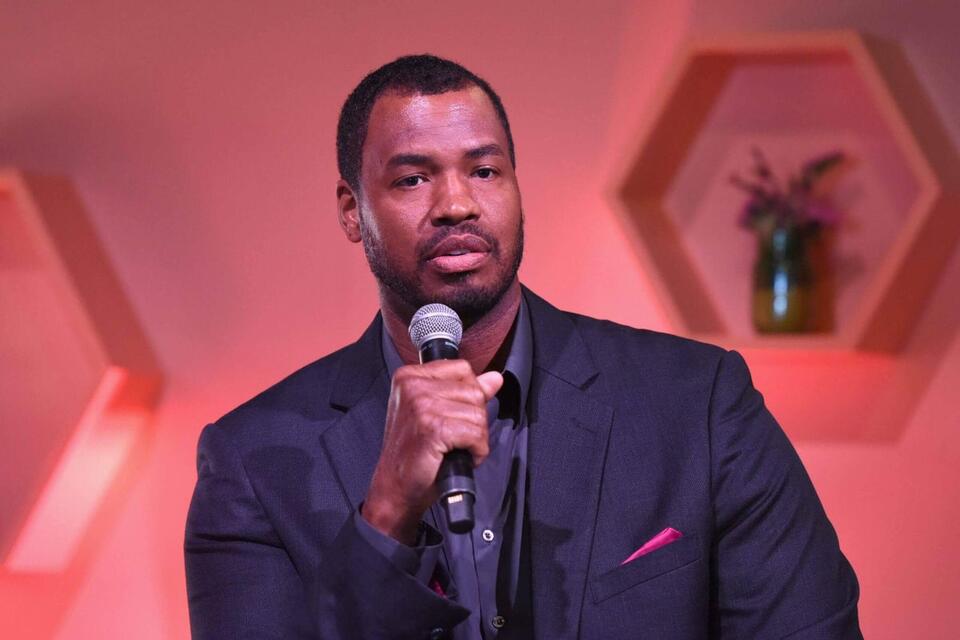
Jason Collins: Courage Beyond the Court, Resilience Against Glioblastoma

Jason Collins has always been a trailblazer. In 2013, he became the first openly gay active NBA player, shattering barriers and inspiring countless athletes and fans. Today, he faces another battle, Stage 4 glioblastoma, one of the most aggressive brain cancers known to medicine. Collins first experienced symptoms in August 2025: confusion, memory lapses, and difficulty focusing. By September, his family announced he had a brain tumor. On December 11, Collins himself revealed the diagnosis in an ESPN essay, describing the cancer as a “monster with tentacles” spreading across his brain. Despite the grim prognosis, median survival of 12–18 months, Collins has chosen to fight with the same toughness that defined his NBA career. Supported by his husband, Brunson Green, and buoyed by the love of his community, Collins is undergoing radiation, chemotherapy, and experimental therapies in Singapore. Beyond basketball, Collins has always loved mentoring young athletes, advocating for LGBTQ rights, and building community. His resilience now reminds us that health is not guaranteed, and vigilance is essential. Treatment Options While there is no cure, treatments aim to slow tumor growth and improve quality of life: Prognosis Risks & Challenges In summary: Glioblastoma is one of the deadliest brain cancers, with rapid progression and limited treatment options. Jason Collins’ diagnosis highlights both the personal toll and the urgent need for continued research into more effective therapies. Sources: my.clevelandclinic.orgCleveland Clinic mayoclinic.orgMayo Clinic mdanderson.orgMD Anderson Cancer Center Call to Action:We must stay on top of our health. Screenings save lives. Early detection matters. And for the LGBTQ community, rallying around Jason and his family is more than solidarity, it is a continuation of the movement he helped ignite. Career Highlights:

BLACK PEOPLE, BLACKLIVES, COMMUNITY, ECONOMICS, ENTERTAINMENT, FINANCE, HEALTH, JUSTICE, JUSTICE SYSTEM, NEWS, POLITICS, RACE, SPORTS

Michigan’s Double Standard: Harbaugh, Moore, and the Question of Racial Bias

The University of Michigan has become a case study in contradictions. When Jim Harbaugh was implicated in two consecutive scandals, first violating recruiting rules during the COVID dead period, then presiding over the Connor Stalions sign‑stealing scheme, the university stood by him. Even as the NCAA dragged its feet for years before finally issuing historic fines and a 10‑year show‑cause penalty in 2025, Harbaugh was allowed to leave gracefully for the NFL. His reputation, though tarnished, was never destroyed. Now compare that to Sherrone Moore. Elevated to head coach in 2024, Moore was fired for cause in December 2025 after allegations of an inappropriate relationship with a staff member. The facts remain unclear, yet the university acted swiftly and decisively, ending his career overnight. Within hours, Moore faced criminal charges, his name splashed across headlines, his future in coaching effectively erased. Michigan Coaching Controversies: Harbaugh vs. Moore Coach Tenure Major Scandal(s) Outcome Impact on Program Jim Harbaugh 2015–2024 – Recruiting violations (BurgerGate) during COVID dead period<br>- Connor Stalions sign‑stealing scheme (illegal scouting, signal recording) – Multiple suspensions<br>- Left for NFL in 2024<br>- NCAA issued 10‑year show‑cause penalty in 2025 Despite winning the 2023 National Championship, Michigan’s success was overshadowed by historic NCAA penalties and reputational damage Sherrone Moore 2024–2025 – Inappropriate relationship with staff member<br>- Criminal charges: felony home invasion, stalking, breaking & entering – Fired for cause in Dec 2025<br>- Released on bond with restrictions<br>- Lost remaining $12.3M contract value Players felt “betrayed” and emotionally shaken before the Citrus Bowl; Michigan forced into another coaching search just two years after Harbaugh’s exit Wrong is wrong. But the disparity in treatment is glaring. Harbaugh’s systemic violations undermined the integrity of the game itself, yet Michigan protected him. Moore’s alleged misconduct, personal, contested, and far less clear, was immediately weaponized to destroy him. It looks, smells, and feels like a smear campaign, one that ensures he never coaches again. And when you look at who was shielded and who was sacrificed, the shadow of racial bias is impossible to ignore. Why do the differences between Black and White always surface at the ugliest times? Why do institutions like Michigan continue to fail at ethics, accountability, and due diligence when it matters most? Call to Action It’s time to hold the University of Michigan accountable. Like so many other institutions, they must be boycotted, exposed, and put on front street for their double standards and racial bias. We want to hear from you: Your voice matters. Share your thoughts, challenge the narrative, and let’s demand accountability together.

Scroll to Top